The homepage as a brand compass
Context
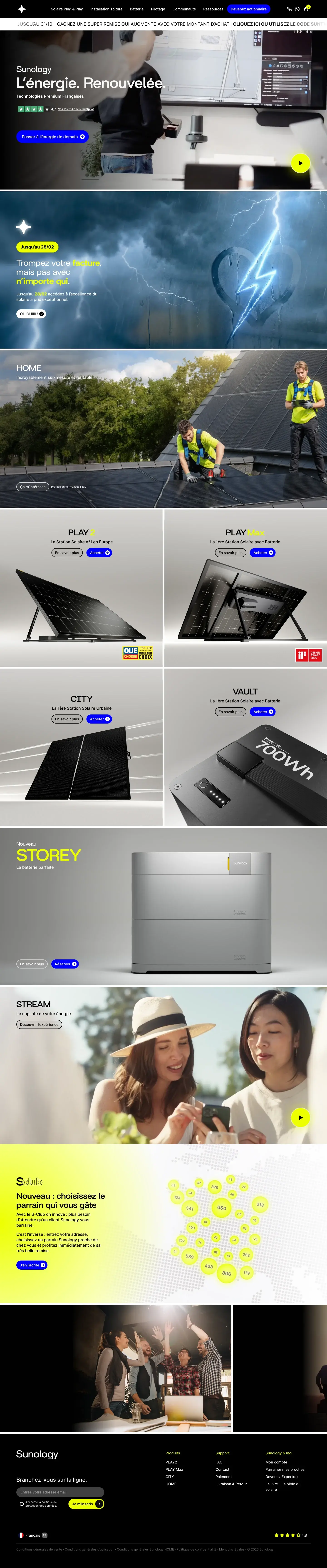
At Sunology, 100% of paid acquisition traffic was directed to dedicated product landing pages, never to the homepage. This deliberate choice freed the homepage from a direct conversion mission and gave it a subtler one: to serve as the compass of the brand ecosystem.
Its visitors are organic, direct, press-referred, or returning customers coming back to explore. They are not looking to buy immediately — they are trying to understand who Sunology is, what it offers, and whether the brand deserves their trust. The ongoing homepage redesign was built to answer that specific intent, not to optimize a conversion rate that was never its performance indicator.
Role
I led the information architecture, message hierarchy, and iteration cycles. My role was to translate data insights (Hotjar heatmaps, scroll depth by source, click-through rate to the right product ranges, returning visitor behavior) into concrete architectural decisions.
Success metrics were not direct conversion rate, but routing accuracy to the right product category, brand engagement depth, and first-time visitor session length. Over 4 years, this translated into roughly ten major redesigns driven by these indicators.
The Product Decisions
Segmenting entry intents
The first design mistake of a homepage is treating it as a homogeneous page. In reality, its visitors have radically different intentions: a first-time organic visitor is discovering the brand, an existing customer is looking for support, a journalist is checking key figures, a B2B partner is evaluating credibility.
We mapped these segments by analyzing post-homepage navigation flows (next pages by source). The architecture was reorganized to address the primary intent — brand discovery — while keeping secondary paths accessible without friction and without competing visually with the main flow.
Propelling the commercial offer
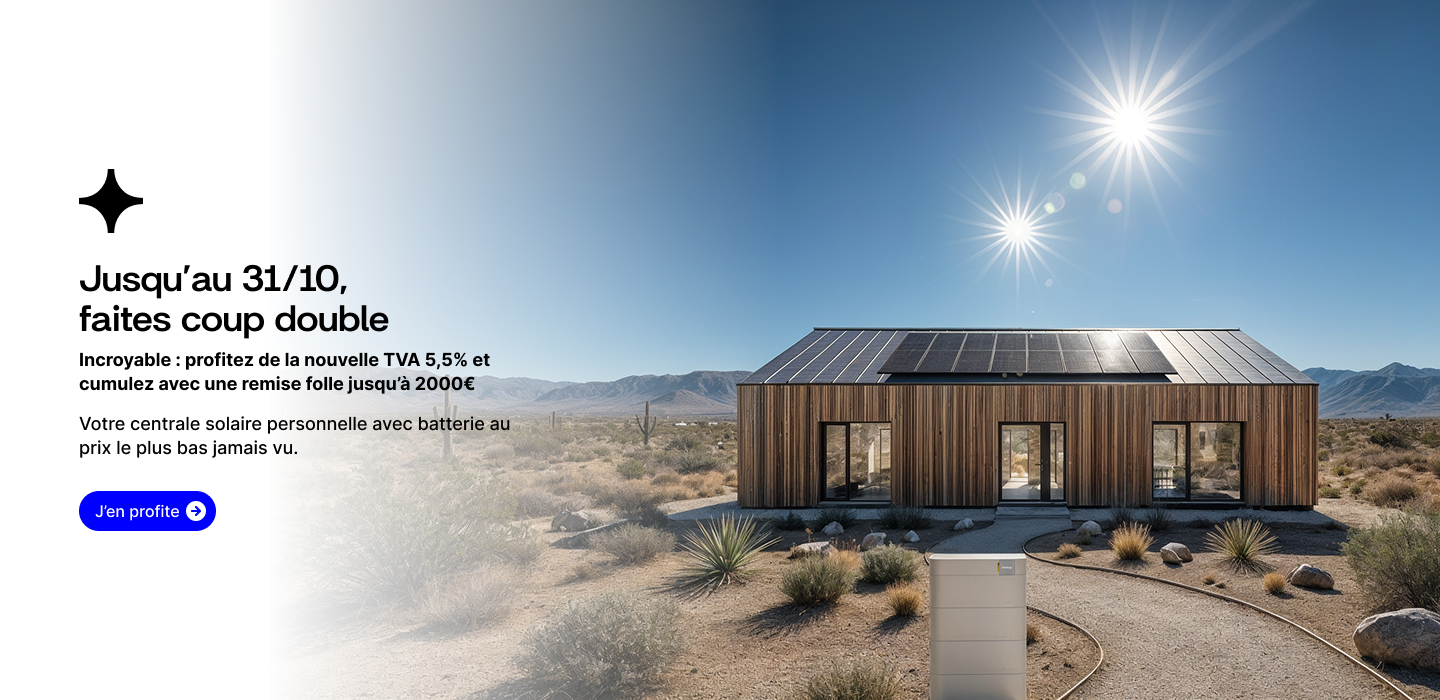
The second section of the homepage has a crucial tactical role: presenting the current commercial offer. At Sunology, the end of the month is a major growth driver thanks to time-sensitive promotions.
This section must be visible immediately after the hero to capture attention without cluttering the main brand message. It acts as an urgency lever (FOMO) for short-term conversion, driving significant revenue spikes while keeping the above-the-fold focused on the core value proposition.
Orient without paralyzing
Sunology's catalog covers several ranges (PLAY, PLAY+, GENIUS) with distinct use cases: renters without drilling, homeowners with a rooftop, vacation properties. Exposing the full catalog on the homepage created decision paralysis — visitors browsed endlessly without committing to any product funnel.
We designed the discovery block as a two-step qualification system: a single profile question (renter or homeowner) is enough to personalize the display and route the visitor to the most relevant range. The homepage no longer presents the catalog — it identifies the visitor and routes them, leaving the product page to do the work of conviction.
Building the pre-purchase trust layer
Since conversion happens on product landing pages, the homepage plays a different but equally strategic role: building the trust capital that will activate when visitors reach those pages. A visitor who has already absorbed the press logos, 50,000+ customers, and brand storytelling on the homepage will arrive at the landing page with trust already established — and will convert at a higher rate.
We designed the social proof sequence as a pre-conversion infrastructure: each element (reviews, labels, press, customer stories) answers a specific objection the visitor will encounter later in their purchase journey. The order and density of these elements were iterated based on scroll depth data and observed behavior upstream of product pages.
